
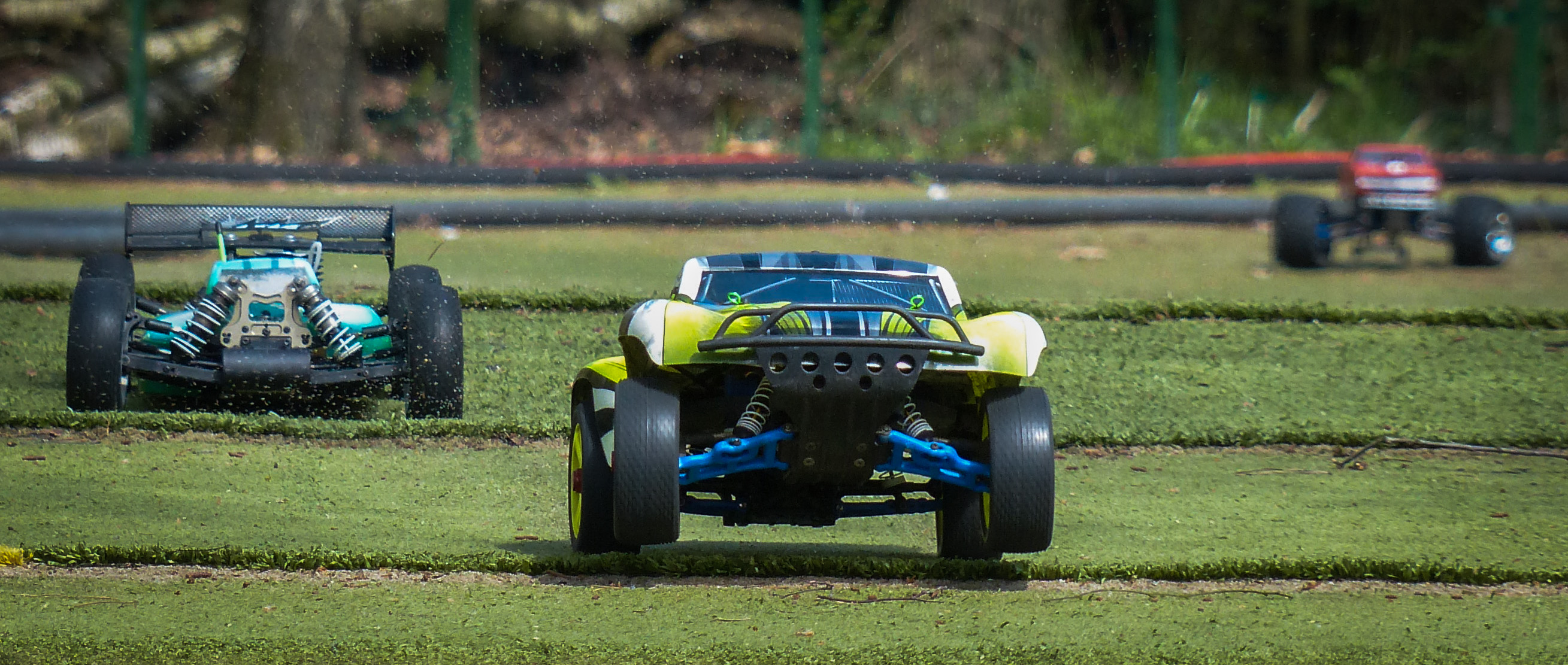
Building an RC track in your yard is one of the most rewarding projects in the hobby. You get unlimited practice time, a place to test setups, and a spot for friends to come race. The track does not need to be fancy or expensive. Some of the best backyard tracks started as nothing more than a mowed path in the grass with a few dirt jumps.
01 Choosing Your Layout
Walk your yard and figure out how much space you can dedicate. A minimum footprint of about 20 by 30 feet gives you enough room for a basic oval with a couple of turns. Larger spaces allow for more complex layouts with sweeping curves, chicanes, and jump sections.
Sketch your layout on paper first. Include:
- A main straight long enough to build speed
- At least one sweeping turn and one tight hairpin
- A tabletop jump and a step-up if you have room
- A pit area off to the side for repairs and battery swaps
Drive the layout in your head and think about flow. Good tracks have a rhythm where speed sections lead into technical sections and back again. Avoid sharp angles that feel unnatural or force awkward line choices.
02 Surface Preparation
The surface determines how your cars handle and how much maintenance the track needs. Options from simplest to most involved:
- Mowed grass: the easiest option. Mow a path short and leave the borders longer. Works for bashing and casual racing
- Packed dirt: strip the grass, wet the soil, and compact it. This gives the best grip and most realistic racing surface
- Clay: if you have clay soil, it compacts into a hard, durable surface that handles rain better than regular dirt
- Carpet: indoor/outdoor carpet laid over flat ground creates a consistent high-grip surface
For a dirt track, rent a plate compactor or use a hand tamper after wetting the soil. Compact in layers for the best result. The track surface should be slightly crowned (higher in the center) so water drains to the edges.
03 Building Jumps
Start small. A basic tabletop jump needs a gradual takeoff ramp, a flat top, and a matching landing ramp. Build the ramp from packed dirt or plywood at about a 20 to 30 degree angle. The flat top should be long enough that cars land on the downslope rather than nosediving off the edge.
Double jumps and rhythm sections come later once you have the basics dialed. Build every jump so there is a clear runout area in case someone overshoots.
04 Borders and Barriers
Define the track edges with something visible and forgiving. Pool noodles cut in half, landscape timbers, or PVC pipe along the edges keep cars on track without causing damage on impact. Avoid hard barriers like concrete blocks on high-speed sections.
05 Maintenance
- Water the track surface before each session to keep dust down and maintain grip
- Repair ruts and holes after heavy use by adding dirt and re-compacting
- Mow grass borders regularly to maintain visibility
- Rebuild jump faces that get worn down from repeated landings
A backyard RC track is never really finished. You will constantly tweak the layout, rebuild jumps, and adjust lines based on how cars drive on it. That ongoing process is part of the fun. Start simple, get cars on it, and improve as you go.